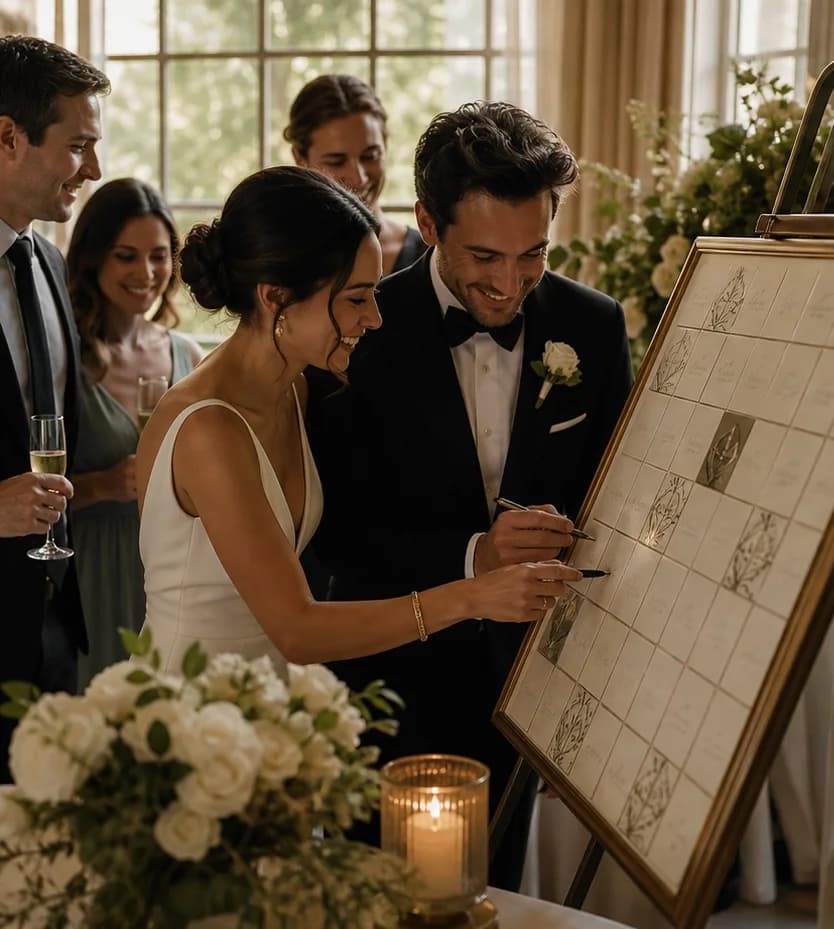
Start with one obvious action
An interactive guestbook asks guests to do something more specific than sign their name. The useful part is the contribution, not the novelty of the equipment. Decide whether you want a picture, a place, a voice, a story, or advice you can act on.
Write a one-sentence instruction and demonstrate it before the event. If you need several paragraphs to explain the activity, simplify the first step. Keep optional extras genuinely optional so someone with a few spare minutes can still leave something meaningful.
Map the people and places in your story
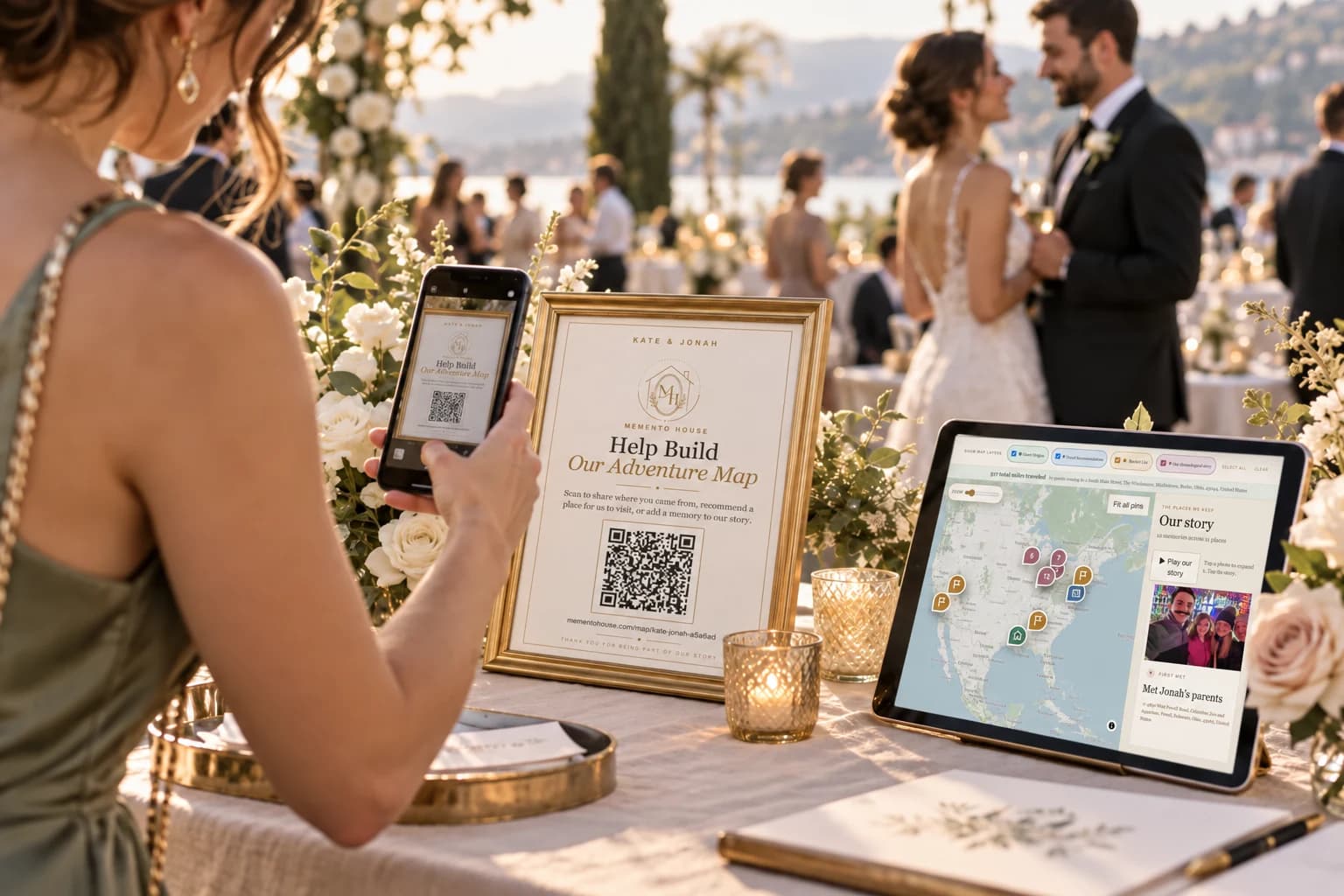
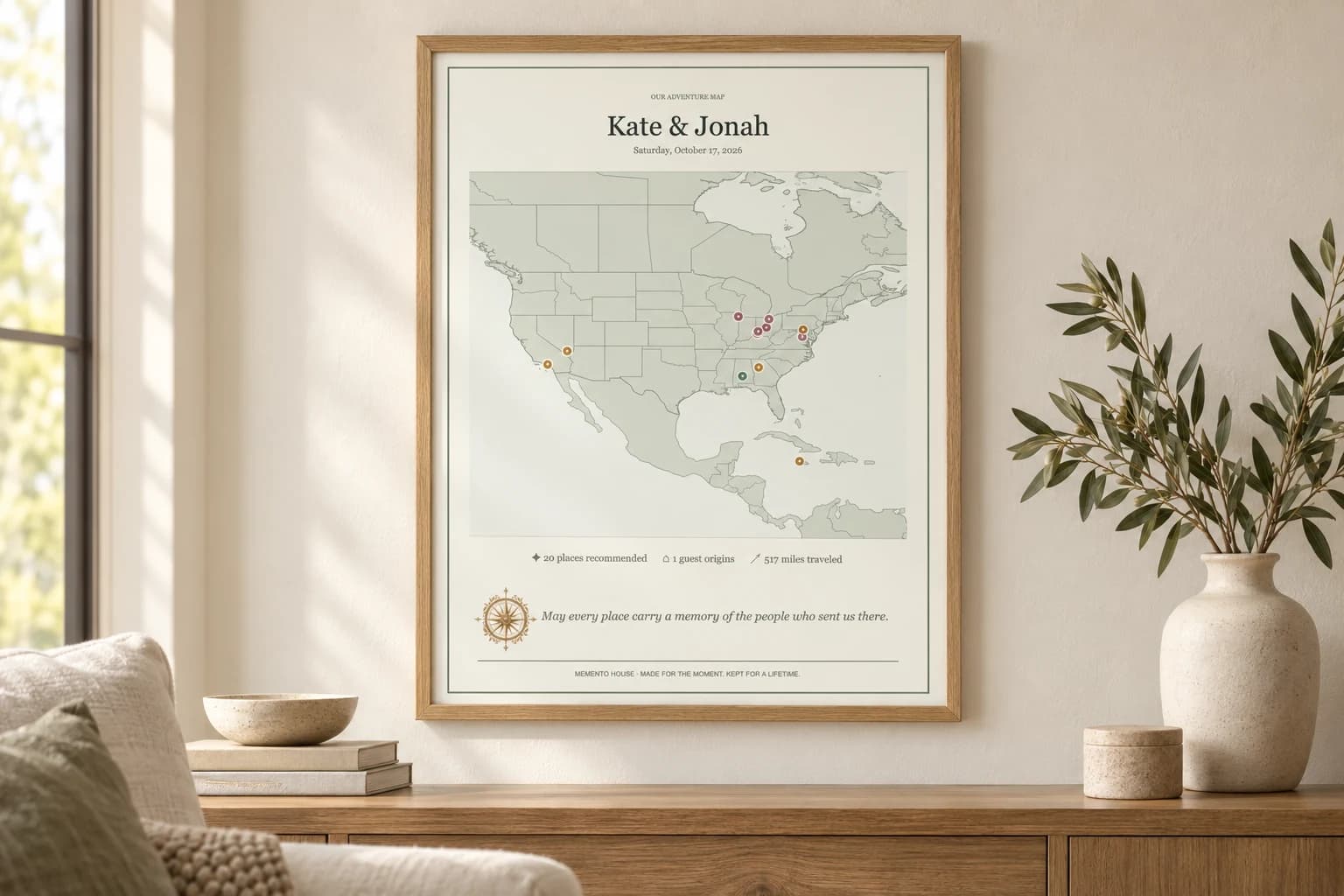
Ask guests to add their hometown, their journey to the wedding, or a place they recommend. The prompt connects your community geographically and creates a reason to explore other contributions. A sign reading “Where should we go next?” is more concrete than a general request to use an app.
Memento Map opens in a browser through a QR code or link. Guests add a place, then contribute within the available package features. Map Plus lets the couple move recommendations into a Travel Journal. If your guests prefer handwriting, put recommendation cards beside the signs.
Let photos begin the conversation
An instant-photo album makes a contribution visible immediately. Place a sample photo with a short caption beside the camera so guests know whether to take one photo per person, couple, or group. Provide a place to stick the photograph and a prompt beyond “Congratulations.”
Try “How did we meet?” or “What should we remember about tonight?” Check film, batteries, lighting, and adhesive supplies. Nominate a helper and offer a seated writing surface. The album can be a success without every guest taking a separate photo; choose a participation rule that avoids long queues.
Invite a voice message
Audio captures the sounds of the people you love, including their jokes and storytelling habits. A quiet corner with a short recording prompt can help guests feel comfortable. Ask for a favorite memory or a wish for the next chapter of your life.
Test the device and background sound before the reception. Explain how to start, stop, and redo a recording if the system allows it. Keep a written alternative for guests who cannot hear the instructions or prefer not to record. Plan who will collect and back up the files afterward.
Give video contributors an easy prompt
A video message works best when guests have something specific to say. Offer two options: “Tell us a story” or “Share one wish.” A small group can contribute together, which may feel less intimidating than facing a camera alone.
Choose a well-lit space away from speakers, check storage, and ask people whether they want to appear. Set a suggested message length so the station remains accessible. Avoid a public screen that plays private recordings automatically. You can decide what to share after reviewing the material.
Use cards that make the answer interesting
Prompts turn a blank page into an invitation. Mix sentimental and playful questions: “A moment that made you smile,” “A tradition we should start,” and “A restaurant worth a special trip.” Guests can answer at the table when they have a quiet moment.
Supply enough room for writing and ask for a name. Sort cards by theme after the wedding, rather than losing them in a pile of decorations. A small prompt menu works better than a long worksheet. Include a free-response card for people whose favorite story does not fit your questions.
Collect recommendations you can actually try
Ask for a place, a practical tip, and why it matters. A named restaurant with a favorite dish is easier to use than “Travel more.” Include local ideas and low-effort traditions alongside dream destinations so the collection is useful at different budgets.
Digital location search can attach a recommendation to its real coordinates. Physical cards can ask for the town and region as well as the name. When you try an idea, tell the guest who shared it. That small follow-up turns the guestbook into a continuing connection.
Add a game without making it compulsory
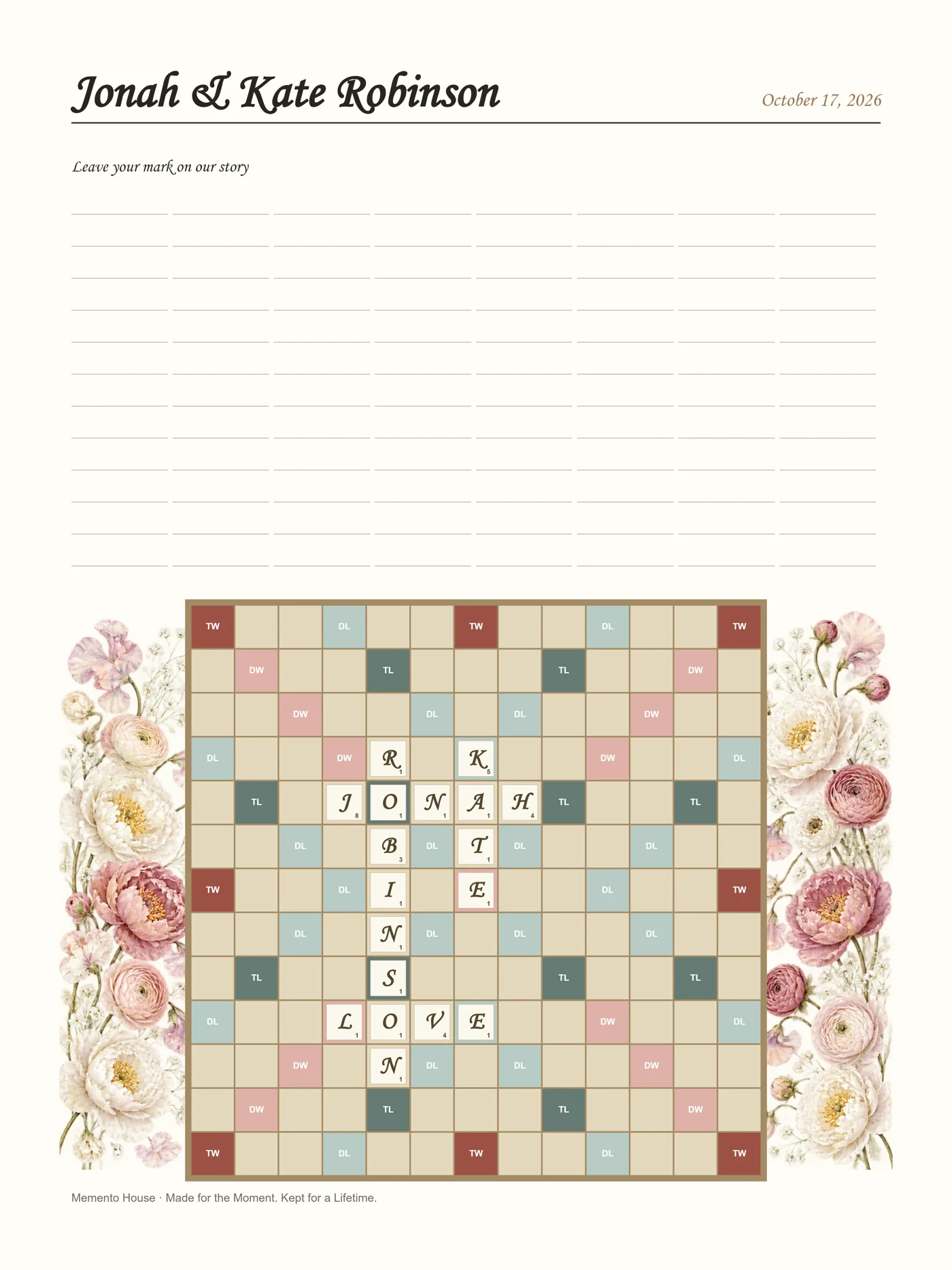
Trivia, predictions, and puzzle pieces can invite participation from people who enjoy a playful activity. Give one clear prompt at each table or let guests pick a card. Use questions everyone can answer instead of testing knowledge only your closest friends share.
Explain how the contribution becomes a keepsake. If the activity produces disposable answers that you will never read, it may work better as entertainment than as your guestbook. Avoid scoring personal advice or embarrassing stories in front of the room. Guests should be able to observe without being put on the spot.
Make QR participation feel human
A QR code is a doorway, not the activity itself. Place the same destination at several useful stopping points, introduce it verbally, and ask a familiar person to help guests understand the first contribution. Tell people that they can join later if the moment is busy.
Choose one main guestbook invitation and keep alternatives simple. A phone-free option, an accessible surface, and a coordinator who knows the plan make the activity easier to share across generations. The format should support your celebration without competing with the people already in the room.
 Guest Book Ideas
 QR Codes
 After the Wedding